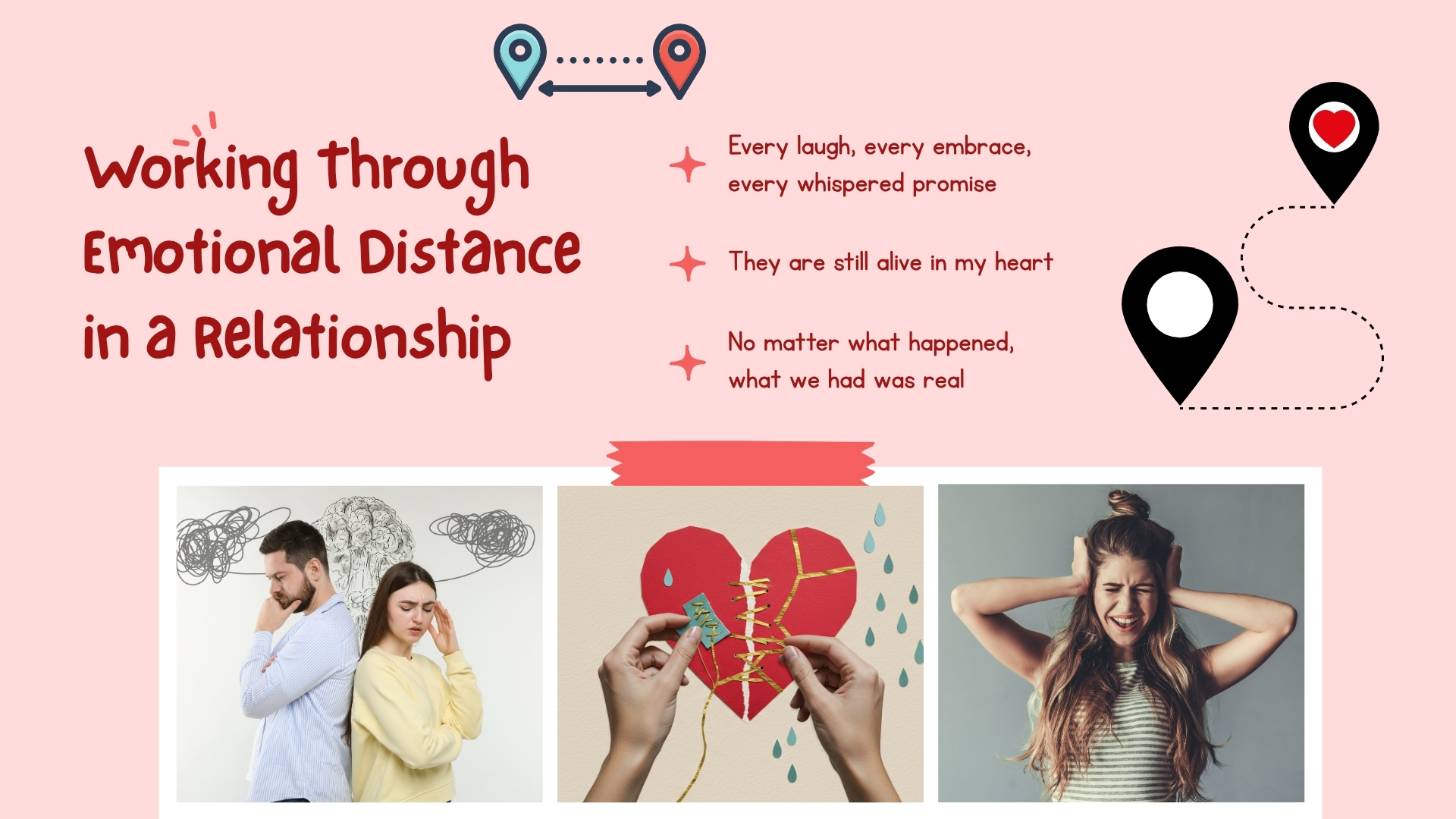
Working Through Emotional Distance in a Relationship
Do you ever feel like some days you and your partner are completely in sync — finishing each other’s sentences — while on other days, it feels like you’re two strangers just sharing a space? That quiet gap between two people who once felt so close can be confusing and painful.
The truth is, emotional distance in a relationship doesn’t mean your love is gone or that the relationship is broken beyond repair. It’s often a signal — a gentle (or sometimes loud) reminder — that connection needs to be rebuilt. Whether it’s the stress of daily life, unresolved arguments, or a slow drift that happens over time, emotional distance can affect even the strongest couples.
Let’s explore what emotional distance actually looks and feels like, why it happens, and how to slowly but surely reconnect — heart to heart.
What Emotional Distance Looks and Feels Like
It’s completely normal for couples to go through off days, quiet weeks, or even rough patches. But emotional distance is different — it’s when you consistently feel unseen, unheard, or disconnected, even when you’re sitting right next to your partner.
It doesn’t usually happen overnight. It builds slowly through missed moments, avoided talks, or the exhaustion of routine. You might notice:
- Conversations feel shallow — You talk about chores, kids, or work, but the deeper emotional sharing fades away.
- Physical affection becomes rare or forced — Hugs, kisses, and casual touches happen less often, or feel more like habits than affection.
- It feels like you’re just roommates — The relationship starts to feel polite, functional, and emotionally flat.
- Avoidance of vulnerability — You both avoid deeper conversations to keep the peace or because it feels uncomfortable.
- You feel alone even when together — You miss the emotional warmth that once came naturally.
This emotional gap doesn’t mean love has disappeared — but it does mean that the connection needs nurturing again. The good news? Awareness is the first step to healing it.
What Causes Emotional Distance in Relationships
Every couple experiences emotional drift differently, but the roots often lie in familiar places — stress, habits, communication patterns, and emotional needs that go unspoken.
-
Unresolved Conflict or Resentment
Even small arguments can grow into large emotional barriers if they’re left unresolved. When feelings aren’t expressed and understood, resentment quietly builds beneath the surface. Over time, partners may start avoiding discussions altogether, creating emotional walls. It’s not one big fight that causes the distance — it’s all the little ones that never found closure.
-
Life Transitions and Daily Stress
Big changes — like a demanding job, new baby, or caring for parents — can consume your emotional energy. You might still love your partner deeply but feel emotionally depleted. When your schedule leaves little time for genuine connection, you can start living more like teammates than lovers.
-
Mismatched Emotional Needs
Sometimes emotional distance stems from differences in how you both connect. One partner may crave conversation at the end of the day, while the other needs quiet time to recharge. Without understanding these needs, one person feels ignored, while the other feels pressured. Neither is wrong — it’s just a difference in emotional rhythm that needs communication and compassion.
-
Avoidance of Vulnerability
For many people, opening up feels risky. Maybe past experiences taught you to stay guarded, or maybe you fear being misunderstood or rejected. When both partners stop being emotionally honest — even out of self-protection — the relationship can start to feel emotionally numb.
As therapist wisely says:
“Emotional distance doesn’t happen overnight. It develops over time through repeated stress, conflict, or unspoken needs. But with patience, awareness, and guided effort, couples can bridge that gap and rebuild closeness.”
The Emotional Impact of Growing Apart
When emotional distance grows, it can feel like you’re stuck in a loop. The more you sense your partner pulling away, the more anxious or uncertain you feel. That anxiety can make you withdraw too — and the gap widens.
You may find yourself wondering:
- “Is something wrong? Did I do something? Are they still happy with me?”
This lack of clarity can be just as painful as an argument. Some partners cope by trying to fix things instantly, while others shut down or numb their emotions just to avoid more hurt. Over time, emotional withdrawal can lead to issues with intimacy, trust, and communication — even when love still exists underneath it all.
The key is not to see emotional distance as a failure but as a signal — an opportunity to reconnect differently, with more intention and empathy.
Steps to Reconnect and Repair Emotional Distance
The best part about emotional distance? It can absolutely be repaired. Relationships naturally ebb and flow, but with mutual effort, couples can restore warmth, closeness, and understanding.
-
Name the Disconnection Together
It’s powerful to simply acknowledge what’s happening. Say something like, “I’ve been feeling a bit disconnected from you lately, and I miss how we used to be.” This opens the door without blame. It shifts the focus from fault to teamwork. You’re not against each other — you’re on the same side, facing the problem together.
-
Rebuild Emotional Safety
When you talk about your feelings, practice listening without interruption or judgment. Make space for honesty. Respond with empathy, not defensiveness. Emotional safety grows when both people feel they can express themselves without fear of criticism or rejection. Even small changes in tone, body language, and patience can make huge differences in rebuilding that trust.
-
Prioritize Intentional Time Together
You don’t need a big romantic vacation to reconnect — start small. Have your morning coffee together without phones. Cook dinner side by side. Take a walk after work. The goal isn’t grand gestures; it’s consistent moments of presence.
-
Reignite Curiosity About Each Other
One of the most beautiful ways to reconnect is to rediscover your partner with curiosity. Ask questions you haven’t asked in a long time — “What’s been making you feel inspired lately?” or “Is there something new you want to try together?” Even after years together, people change and grow. Staying curious helps your relationship grow, too.
-
Set Small, Achievable Goals
Healing emotional distance isn’t about flipping a switch — it’s about small, steady steps. Maybe agree to check in emotionally once a week or send a thoughtful message during the day. Tiny moments of care create a ripple effect of warmth and closeness over time.
As therapist explains:
“You can’t recreate the past, but you can build a new connection that’s even more authentic and fulfilling. With guidance and patience, couples can learn to communicate in ways that allow love and understanding to thrive again.”
When to Consider Professional Support
Sometimes, despite your best efforts, the disconnection feels too heavy to handle alone. Conversations keep going in circles, or you both shut down instead of opening up. That’s when couples therapy can make a world of difference.
A trained therapist provides a neutral space where both partners feel heard and validated. Therapy can help you uncover hidden patterns, improve emotional communication, and learn tools to rebuild trust and intimacy.
Seeking professional help doesn’t mean your relationship is failing — it means you care enough to fight for it. Therapy is not the end of the love story; it’s often the new beginning that helps you write the next chapter together.
Moving Forward Together
Reconnecting after emotional distance isn’t always easy, but it’s deeply rewarding. It’s about showing up — again and again — even when things feel uncertain. It’s about remembering that love isn’t just a feeling; it’s an ongoing choice.
With patience, honest communication, and a willingness to grow together, you can rebuild emotional closeness and create a relationship that feels safer, stronger, and more loving than before.
So take a breath, reach out, and say the words that matter: “I still choose you.”
Because emotional distance doesn’t mean it’s over — it’s just an invitation to love deeper, listen better, and reconnect with the heart you fell for in the first place.